AI search optimisation focuses on how information is discovered and presented within AI-driven search experiences, such as large language models and search results enhanced by artificial intelligence. As tools like ChatGPT and Google’s AI Overviews become more common, visibility is increasingly shaped by how content is referenced, cited, and trusted rather than how it ranks in traditional search results alone.
This shift means that optimisation is no longer limited to pages appearing as blue links. Instead, it involves understanding how AI systems source information, evaluate credibility, and surface brands or concepts when responding to user questions.
Answer Engine Optimisation (AEO) focuses on helping search systems deliver clear, direct answers to user questions. It is centred on how information is structured and presented so that it can be extracted and surfaced as a concise response, rather than requiring users to navigate through multiple pages.
AEO has historically been associated with features such as featured snippets, knowledge panels, and voice search results, where search engines prioritise precise answers over traditional listings. In these environments, clarity, context, and accuracy are critical, as search systems aim to return a single, trusted response to a specific query.
Rather than emphasising page-level rankings, AEO concentrates on how well content addresses a question and how easily that answer can be understood and reused by search platforms. This makes it particularly relevant for informational searches where users are seeking immediate explanations or definitions.

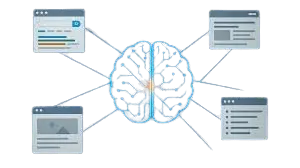
Generative Engine Optimisation (GEO) refers to how brands, concepts, and sources are represented within AI-generated responses produced by large language models and other generative search systems. Instead of returning a single extracted answer, these systems generate responses by synthesising information from multiple sources and drawing on patterns learned from trusted data.
In this context, visibility is shaped by whether a brand or source is recognised, referenced, or cited when an AI system constructs its response. GEO therefore focuses on how information is associated with entities, how consistently it is referenced across the web, and how trustworthy it appears within the broader information ecosystem.
Unlike traditional search results, generative engines do not rely on page-by-page rankings in the same way. They prioritise confidence, coherence, and source reliability when deciding which information to include. GEO addresses this shift by aligning content and brand signals with how generative systems identify authoritative sources and incorporate them into AI-driven answers.
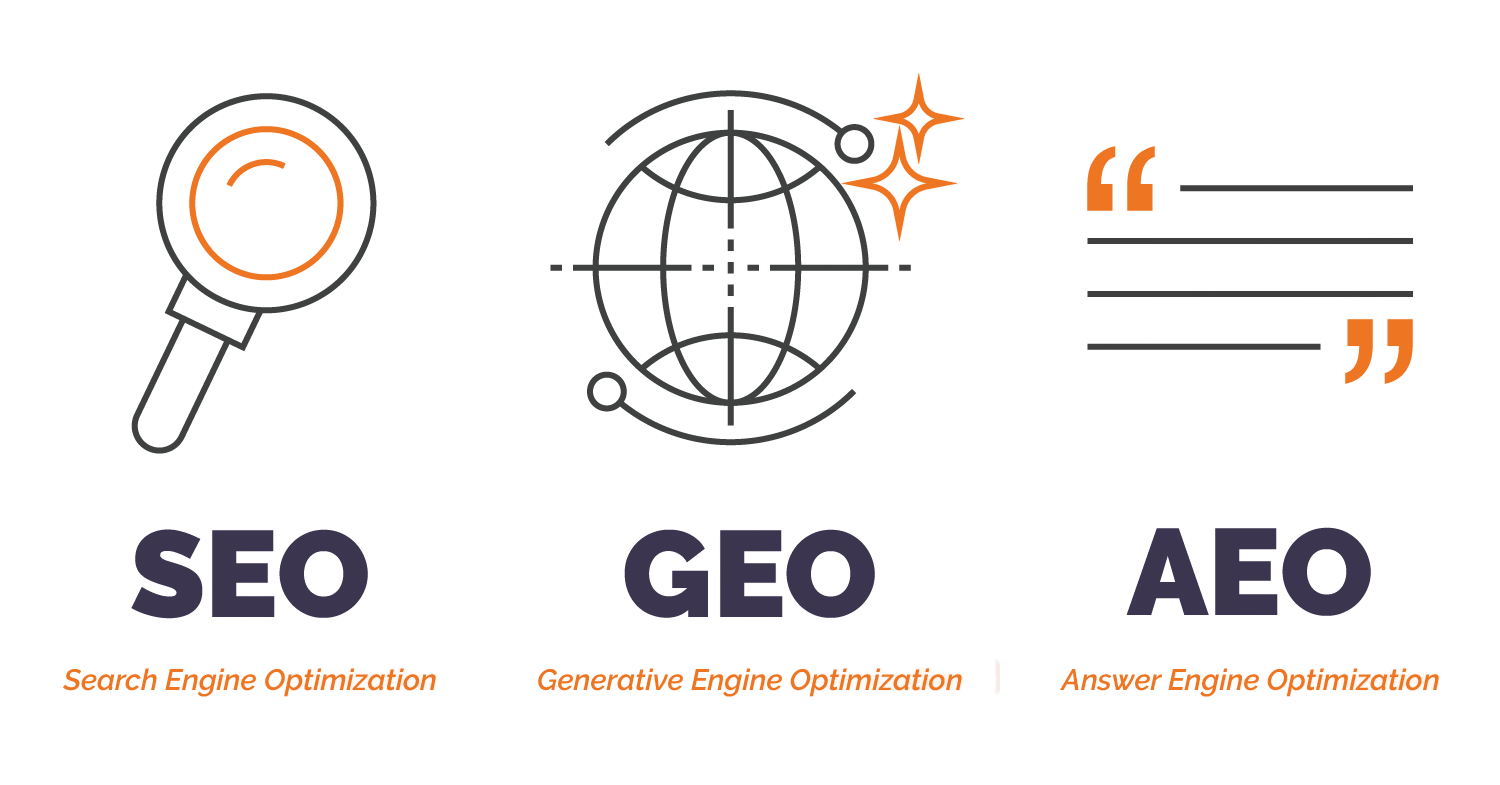
Traditional SEO is primarily concerned with how individual pages appear in organic search results, where visibility is influenced by relevance, structure, and how content aligns with user queries. It focuses on helping search engines index and rank pages so they can be discovered when people search for specific topics.
Answer Engine Optimisation (AEO) shifts this focus from pages to answers. Rather than competing for placement in a list of results, AEO is about ensuring that information can be extracted and presented as a direct response to a question. In these cases, visibility is tied to clarity and precision, as search systems aim to surface a single, trusted answer instead of multiple options.
Generative Engine Optimisation (GEO) represents a further evolution. Instead of extracting one answer, generative systems create responses by combining information from multiple sources. GEO is therefore less about individual pages and more about how brands, entities, and sources are recognised and referenced within AI-generated content.
While these approaches differ in how information is surfaced, they are not mutually exclusive. Traditional SEO, AEO, and GEO each address different aspects of modern search behaviour, and together they reflect how discovery is shifting from ranked lists to direct answers and generated explanations across search platforms.

AI-driven search systems rely on a combination of learned knowledge and referenced sources to generate responses. Rather than retrieving a single page and ranking it, these systems evaluate information based on how consistently it appears across trusted sources and how well it aligns with established entities and concepts. Trust is built through patterns, repetition, and contextual agreement rather than through isolated signals.
When an AI system generates an answer, it draws on information that it considers reliable, relevant, and coherent within a broader knowledge framework. Sources that are frequently referenced, clearly attributed, and contextually aligned are more likely to influence generated responses. This is why mentions, citations, and associations across authoritative websites play an increasingly important role in AI-driven visibility.
In this environment, trust is not established by a single page or optimisation action. It emerges from how information is represented across the web over time. AI-driven search prioritises signals of consistency and credibility, favouring sources that demonstrate clarity, relevance, and alignment with recognised entities when responding to user questions.
AI search optimisation does not replace traditional SEO. Instead, it extends how visibility is achieved as search experiences evolve beyond lists of links. While SEO continues to support how pages are discovered and ranked in organic results, AI-driven systems introduce new ways for information to be surfaced through answers, summaries, and generated explanations.
In this broader context, SEO, AEO, and GEO work together rather than in isolation. SEO provides the foundation by ensuring content is accessible, relevant, and structured in a way search engines can interpret. AEO supports situations where users are seeking direct answers, and GEO addresses how brands and sources are represented within AI-generated responses.
As search platforms continue to integrate generative features, understanding how these approaches complement one another becomes increasingly important. AI search optimisation fits alongside SEO as part of a wider effort to support discoverability, trust, and relevance across both traditional and emerging search environments.


Understanding how AI-driven search fits into the wider search ecosystem is easier with a clear foundation. Our explanation of what is SEO provides that context by outlining how traditional search visibility is established.
The principles behind that visibility are explored further in our guide on how SEO works, which explains how search engines discover, evaluate, and organise information over time.
Where these ideas are applied in practice across both traditional and emerging search environments is outlined on our SEO services page, which brings these concepts together within a structured, long-term approach.
Copyright © 2026 All rights reserved.
CleverClimb SEO Company South Africa