
Websites serving a ministry have a different information challenge from websites designed around a single product. Visitors may arrive looking for the organisation's purpose, an educational resource, Sabbath School material, a prayer page or a particular teaching video. They need to understand where to go without having to know how the site was built.
CleverClimb SEO's work on Voice From The Wilderness brings together WordPress development, content structure, responsive presentation and search optimisation for a website serving several kinds of ministry resources. The project demonstrates how navigation, page relevance, readable layouts and publishing workflows work together.
The project context: Several audiences, several kinds of information
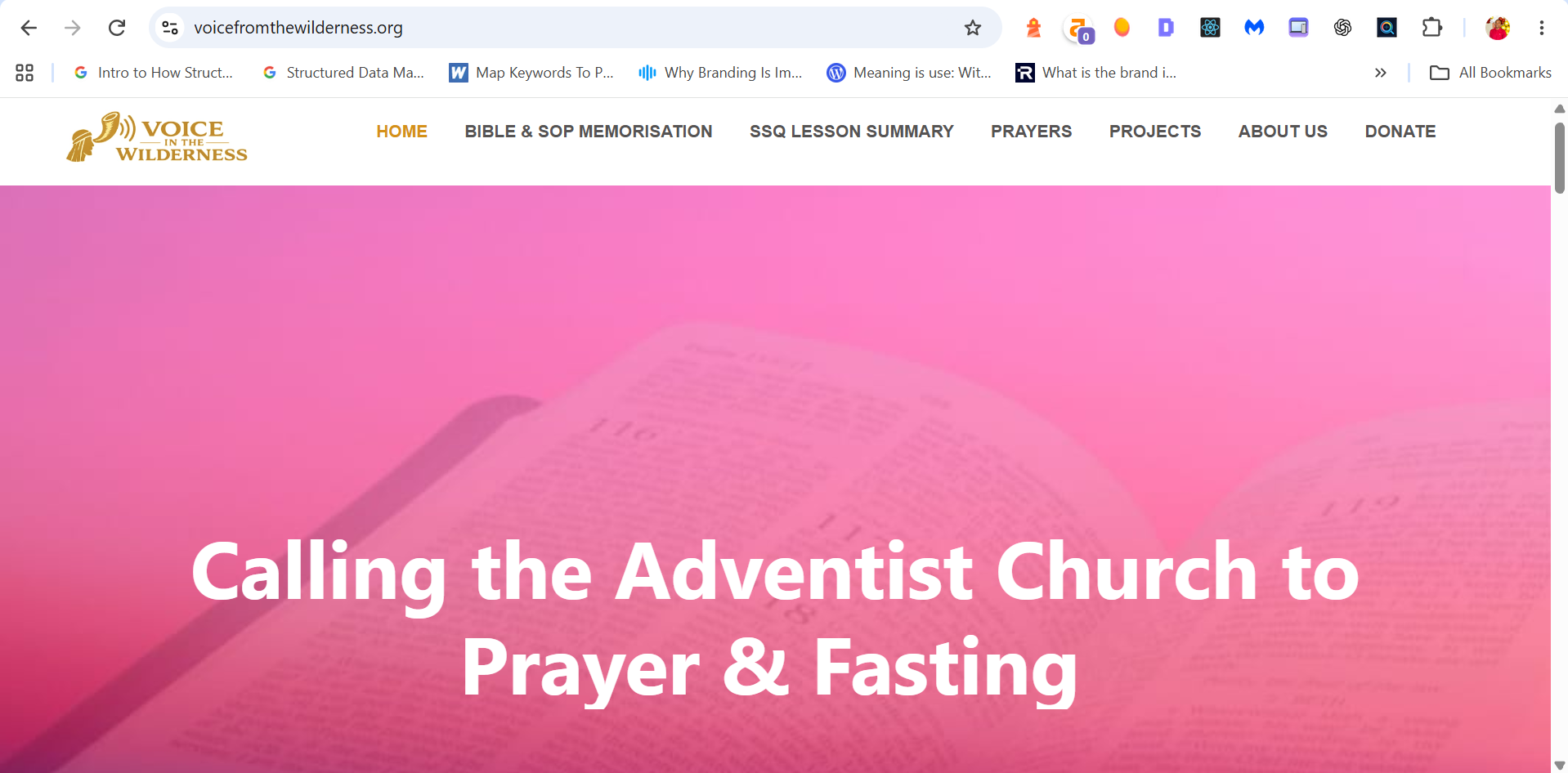
The ministry's site has included sections for:
- Home and About Us.
- Bible and Spirit of Prophecy memorisation materials.
- Prayer-related content.
- Projects and ministry activities.
- Sabbath School summaries.
- Video content and a YouTube-related feed.
A large menu alone does not guarantee good information architecture. The challenge is helping readers move from an immediate need, such as a Bible study or Sabbath School summary, to the right content and then to another relevant resource.
In planning and adjusting the site, our work has included WordPress/Elementor editing, page titles and meta descriptions, internal linking, mobile presentation, and practical content/media changes.
Why WordPress was appropriate
For a site with educational and ministry resources that need regular updates, WordPress provides a familiar CMS rather than requiring a developer to change application code for every new page.
We worked with Hello Elementor and Elementor-based layouts. The practical trade-off is that a visual editor can make routine content updates approachable, while performance, responsive styling and a coherent heading hierarchy still require attention.
The lesson is not that WordPress automatically produces an SEO-friendly site. Content needs to be discoverable through useful navigation and links; titles, headings and metadata should accurately describe the page; and excessive scripts or poorly handled media can affect visitors.
Google's SEO Starter Guide provides a useful external foundation for discoverability and page structure, while the official WordPress support documentation is an appropriate reference for editors maintaining the platform.
Information architecture: Make the reader's next step clear
A ministry site can have multiple topic families, including prayer, educational materials, memorisation resources, projects and video summaries. These should still feel like a coherent experience.
Our work included reviewing page names and descriptions, organising navigation and identifying relevant internal links among related content. A visitor who arrives on a lesson should be able to understand the broader context and reach another suitable lesson or resource.
This approach follows an important usability principle: people often scan web content to find information relevant to their immediate task. Nielsen Norman Group's research explains how descriptive headings and focused sections help people decide what to read. See Website Reading: It (Sometimes) Does Happen.
The practical implication is to choose descriptive section labels and link text, not rely on a large amount of introductory prose.
On-page SEO: Page-by-page relevance
The project has involved developing and revising search titles and descriptions, checking headings, improving internal links and considering how each resource page answers a distinct need.
For a ministry website, not every visitor uses the same search language. Someone looking for Sabbath School information may need a different page from someone researching Bible memorisation. Forcing all those subjects into the homepage would reduce clarity.
The aim is to help both readers and search engines understand which page addresses which topic. Google also explains that a page's title and snippet may be formed from on-page content, not only the meta tags; the actual content therefore needs to be coherent and useful.
Mobile layouts and readable study material
A considerable part of website usability is simply making the material comfortable to use on a phone.
The project history includes mobile text-size adjustments, layout styling and responsive changes. These matter especially for long teaching resources, where awkward line wrapping or tiny text can make users abandon the page.
The W3C Web Content Accessibility Guidelines overview offers a standards-based reference for readable, navigable and accessible web content. Following individual best practices does not mean the whole site has passed a formal WCAG conformance audit, and we are not claiming certification.
Video and regularly updated material
The ministry has used video content, and our project work has included a YouTube-related feed or video integration. Media can make a website more useful, but it also introduces practical questions: which videos are shown, how the feed is maintained, whether visitors can find the accompanying topic and what happens when third-party content fails to load.
SEO, performance and measurement
Google distinguishes crawlability and indexing from actual search traffic. Its Search Console introduction explains how site owners can review indexing and performance separately.
That distinction matters for a resource-rich site. It is possible to have pages with good visible structure that have not yet earned relevant search impressions, just as a sitemap submission does not guarantee ranking.
For performance evaluation, Google's Core Web Vitals guidance defines loading, responsiveness and layout stability measures.
What this work demonstrates
Voice From The Wilderness illustrates why building a useful website involves more than choosing a theme. Content needs appropriate grouping, readable layouts, sound on-page information, purposeful media and maintainable publishing workflows.
The project is a practical example of the WordPress work we can contribute: combining content editing and information architecture with technical SEO awareness and ongoing presentation improvements.
It also illustrates a discipline we bring to our client work: distinguish what was implemented from what still needs improvement. The real value of a case study is the explanation of the decisions, not an inflated success metric.
Explore: Website Design · Web Development · Voice From The Wilderness