Built for Your Business.Connected to Your Goals.Ready to Grow.
Your business needs more than a website that looks good. CleverClimb SEO Pty Ltd develops custom websites, web applications, e-commerce platforms and digital business systems designed around your goals and operations.
A useful website can do more than introduce your business. It can accept bookings, process orders, give customers access to their accounts and help your team manage information. Web development turns those requirements into working features, supported by the data and business rules behind them.
We start with the jobs your website needs to perform. That might mean connecting an enquiry form to a CRM, building a customer portal, organising an approval workflow or linking an online shop to stock and fulfilment systems. The goal is practical functionality that fits your operations and makes everyday tasks easier to complete.
Some projects need a focused extension to an existing platform; others need a custom application. We help define the right scope before choosing the technology, with consideration for how the system will be used, maintained and extended.
Our Website and Web Application Development Services
From customer-facing features to the systems behind them, we develop functionality around defined business requirements.
Custom Website Development
Build a website around the way your business works. Custom forms, booking journeys, customer accounts and quotation tools can help visitors take meaningful action while giving your team better control over enquiries and information.
Web Application Development
Turn a business process into an application your team or customers can use online. Client portals, internal dashboards, approval workflows and database-backed tools can bring information together with access tailored to each user's role.
E-commerce Website Development
Create an online store that supports how you sell and fulfil orders. Product catalogues, payment gateways, stock connections and delivery options can be planned together, with custom purchasing workflows where standard store features are insufficient.
Content Management Systems
Give your team a practical way to publish and maintain content. Structured content types, editing permissions and reusable page components make routine updates easier while keeping the site's presentation and functionality consistent.
API Integrations and Workflow Automation
Connect your website to the systems your business already relies on. CRM, accounting, booking and communication integrations can reduce duplicate data entry and keep information moving, subject to each platform's API capabilities and access requirements.
Website Modernisation and Performance
Improve an existing website when its technology or structure is holding the business back. We assess code, dependencies, content and integrations to identify practical upgrades, performance improvements or a phased rebuild that supports future changes.
When Standard Website Solutions Are No Longer Enough
Off-the-shelf tools can be a sensible starting point. Development becomes valuable when their limitations create friction for your customers or your team.
Missing custom functionality
A template may not support your booking rules, quotation process or customer journey. Purpose-built features and database structures can address those needs without forcing your business into an unsuitable workflow.
Disconnected business systems
When customer, order and operational data live in separate tools, teams spend time reconciling information. Planned API integrations can connect those systems with clear rules for data ownership, synchronisation and error handling.
Websites that are difficult to extend
Fragile code and tightly coupled features can make every update risky. A technical review helps determine whether targeted refactoring, modular components or a staged rebuild will provide a more sustainable foundation.
Time-consuming manual workflows
Repeated copying, follow-up emails and spreadsheet updates can slow down daily work. Automated notifications, approval steps and connected forms can reduce repetitive administration while keeping people in control of important decisions.
Web Design vs Web Development: What Does Your Business Need?
Website Design
Design shapes presentation, user experience, navigation and responsive layouts. It helps visitors understand your offer and find the right next step. For a standard business website with familiar pages and enquiry forms, our Website Design services may be the right starting point.
Web Development
Development builds the functionality behind the experience: databases, customer accounts, application logic, integrations and operational tools. It becomes central when your website must do something specific that a standard page layout or template cannot provide.
Many projects need both disciplines. A booking platform needs clear interfaces as well as scheduling rules; a customer portal needs an understandable journey as well as secure access to information. We plan design and development together around those requirements.
Our Web Development Process
A clear delivery process connects business requirements to a working system, with opportunities to review decisions along the way.
01
Discovery and Requirements
Understand your goals, users, existing systems and operational constraints. We define essential features, priorities and acceptance criteria before agreeing on the development scope.
02
Planning and Architecture
Map user journeys, data structures, permissions and integrations. Choose an appropriate architecture and delivery plan, including dependencies, hosting requirements and opportunities for phased releases.
03
Interface and User Experience
Plan how people will navigate and complete tasks. Interface layouts and prototypes help clarify complex interactions before they become working features, connecting design decisions to practical requirements.
04
Development and Integration
Build frontend interfaces, backend functionality and agreed system connections. Work is organised into reviewable stages so feedback can inform the implementation as features take shape.
05
Testing and Refinement
Review agreed functionality, validation, permissions and integration behaviour. Check usability, accessibility and responsive behaviour within the project scope, then address findings before release.
06
Deployment and Handover
Prepare the hosting environment, release the application and check critical journeys. Provide agreed documentation and training, with maintenance responsibilities and any ongoing support defined at handover.
Modern Web Technologies. Practical Business Solutions.
Technology is a means to meet the brief. We consider the required functionality, existing infrastructure, editorial needs and long-term maintenance before recommending a platform.
React and Next.js
Suitable for interactive interfaces, reusable components and applications that need a thoughtful mix of server-rendered content and client-side functionality. The implementation should reflect the project's search visibility, data and hosting requirements.
WordPress and WooCommerce
Useful when familiar content editing or established commerce features meet the brief. Custom themes, extensions and integrations can extend these platforms, with plugin choices and maintenance needs considered from the start.
Frontend and backend development
The frontend helps people complete tasks; the backend manages business logic, data and permissions. We plan both sides together so the interface and underlying systems support the same operational goals.
APIs and third-party integrations
Connect existing services where their documented interfaces support the required workflow. Authentication, data mapping, service limits and failure handling influence whether an integration is practical and how it should be maintained.
Custom and headless architectures
Consider separating content management from the presentation layer when multiple channels, custom interfaces or complex integrations justify it. A simpler integrated platform may be a better choice when editorial ease and maintenance costs matter more.
These are options rather than a fixed toolkit. A custom build is useful when it solves a clear problem; an established platform is often preferable when its existing capabilities fit the business well.
Built with Performance, Accessibility and Maintainability in Mind
Quality includes how a system behaves today and how confidently it can be operated and changed after launch.
Responsive development
Build interfaces that adapt to different screen sizes and input methods, with readable content and practical navigation for customers and staff using phones, tablets or desktop computers.
Performance optimisation
Consider image delivery, code loading, caching and data access throughout development. Assess bottlenecks in context rather than promising a fixed score that depends on content, hosting and third-party services.
Technical SEO foundations
Plan crawlable public content, semantic markup, metadata and sensible URL structures. Keep private application areas separate from indexable pages, with redirects and indexing rules considered when replacing an existing site.
Accessibility and usability
Consider semantic structure, keyboard navigation, visible focus, form labels and contrast. Clear feedback and understandable journeys help more people use the system; any formal accessibility assessment is agreed within the scope.
Security-conscious development
Include appropriate access controls, server-side validation and careful handling of secrets and personal information. Plan dependency updates, backups and operational responsibilities without treating any website as immune to security risks.
Maintainable architecture
Use clear component boundaries, structured data and documented integrations so future changes are easier to understand. Agree on ownership, deployment processes and ongoing maintenance before the project is handed over.
Web Development for Businesses Ready to Do More Online
The right solution depends on the work your business needs to get done, whether you are launching a new idea or improving an established operation.
Small and growing businesses
Replace disconnected forms and spreadsheets with practical online tools that support customer enquiries, bookings and day-to-day administration as the business develops.
Online retailers
Bring product information, checkout journeys and operational systems together, with the store's functionality shaped around the way orders are managed and fulfilled.
Service providers
Make it easier for customers to request quotes, book appointments, submit documents or access a client portal, while helping staff manage the work behind each request.
Established organisations
Modernise legacy websites, connect existing platforms and introduce controlled workflows for teams with different responsibilities, permissions and reporting needs.
Entrepreneurs and startups
Define a focused first release that tests a business idea with essential functionality. Plan a foundation that can evolve as real customer feedback clarifies what to build next.
How We Build Useful Business Applications
A custom application is more than a polished dashboard. It needs the right data model, permissions, interfaces, integrations and workflow decisions to support people using it every day.
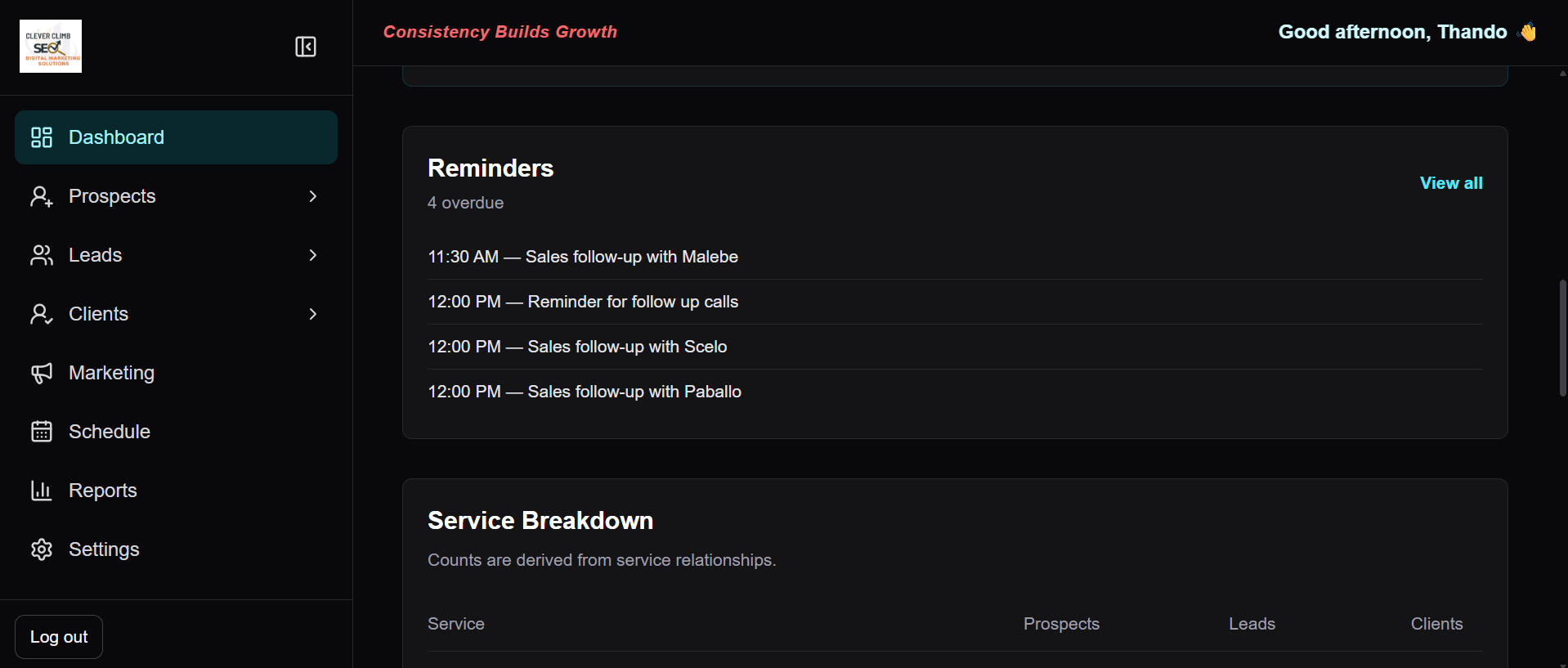
Our internal CleverClimb CRM project demonstrates a Next.js and Supabase application developed around actual agency work: prospects, leads, sales activities, reminders, opportunity stages and acquisition reporting. The case study explains the technical decisions and links to the framework documentation that supports them.
For a customer-facing website, requirements may be quite different. A WordPress site prioritises maintainable content editing, while a React/Next.js application may need custom forms, database permissions and API workflows. We recommend the architecture that fits the requirement, not one framework for every client.
Development costs depend on project complexity, features, database requirements, integrations and the overall delivery scope. A content-managed business website has different requirements from a web application with user roles, custom workflows and several connected systems.
Our existing website packages provide a starting point. Custom functionality requires a defined brief so that development, hosting, third-party charges and ongoing maintenance can be considered together.
What is the difference between web design and web development?
Web design focuses on presentation, user experience and responsive layouts. Web development implements functionality, data handling, integrations and business logic. A project may need both, particularly when a carefully designed customer journey depends on custom features.
Can you build a custom web application for my business?
We can scope applications such as customer portals, internal dashboards and workflow tools around your requirements. Discovery establishes the users, data, permissions and essential features so the proposed solution and delivery plan reflect a defined business need.
Which technologies do you use for web development?
Options include React, Next.js, WordPress and WooCommerce, alongside appropriate backend, database and API technologies. The choice depends on functionality, editorial requirements, existing systems, budget and maintenance needs rather than a single preferred platform.
Can my website connect to third-party business systems?
Many CRM, accounting, payment, booking and communication platforms provide APIs. We first assess the required access, documentation and data flows. Feasibility, licensing, platform limits and ongoing support requirements are confirmed before an integration is included in the scope.
Will my website work on mobile devices and support SEO?
Responsive development and technical SEO foundations are considered as part of the agreed scope. Public pages can use crawlable content, meaningful metadata and semantic structure, while application workflows are planned for relevant devices. These foundations do not guarantee search rankings.
How long does a web development project take?
Timelines depend on the number of features, integration complexity, content readiness and review cycles. We establish milestones after discovery and may recommend phased delivery so essential functionality can be prioritised before later enhancements.
Can you improve an existing website instead of rebuilding it?
Yes, where its existing foundation is suitable. A technical assessment helps identify whether focused fixes, performance work, new integrations or refactoring can meet your goals. A rebuild is considered when the existing architecture creates greater cost or limitations.
How much do web development services cost in South Africa?
Costs vary with the required features, database design, integrations, content management and delivery scope. Use our existing website packages as a starting point, then discuss custom requirements so the proposed scope, exclusions and ongoing costs can be clarified.
Have a Website or Web Application Idea? Let's Build It.
Tell us what your business needs to achieve, which features you have in mind and which systems you already use. We can help clarify the requirements and identify a practical starting point.